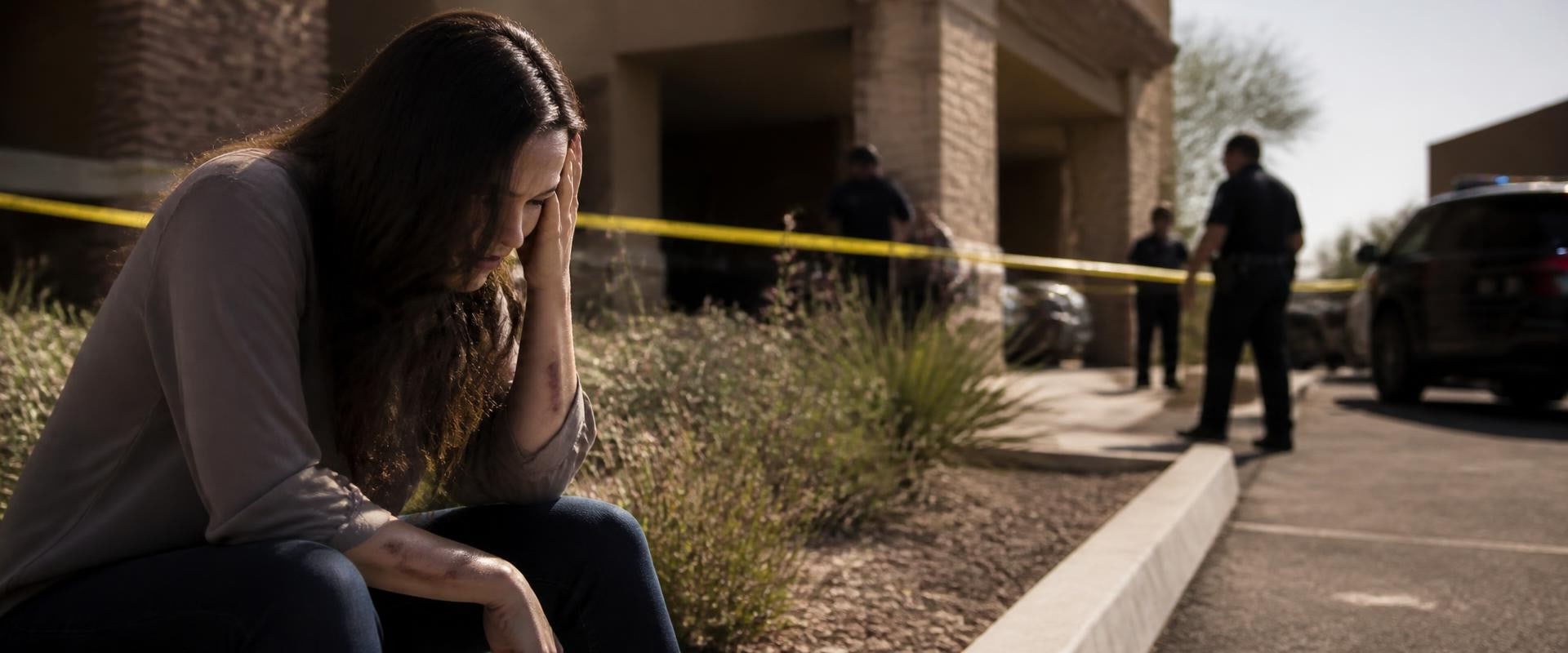
People who reach out after a shooting or stabbing usually arrive with the same handful of worries. Some are about the law. Others are about whether they will be believed, whether it will cost money, and whether it is already too late. Below are direct answers to the questions Arizona victims and families raise most often.
1. Can I really sue someone other than the attacker?
In many cases, yes. Arizona allows a negligent-security claim against the owner of the property where you were hurt. The claim is not about the crime itself. It is about the owner's failure to provide reasonable security against a risk it should have anticipated. That claim is separate from any criminal case against the person who attacked you.
2. What if police never arrested anyone?
Your civil claim is aimed at the property owner, so it generally does not hinge on whether the attacker was caught, charged, or convicted. What matters is whether the crime was foreseeable and whether the owner's security was reasonable.
3. Does it matter that I was stabbed rather than shot?
No. Arizona treats a stabbing on a poorly secured property just like a shooting. If the attack was foreseeable and the owner failed to provide reasonable security, the owner may be liable.
4. I was only visiting. Do I still have a claim?
Possibly. In the leading Arizona case, Martinez v. Woodmar, the person who was shot was a guest at a graduation party, not a resident. The Arizona Supreme Court held that an association controlling the common areas owed residents and their guests reasonable care against foreseeable criminal acts.
5. How does a court decide whether the owner should have done more?
Owners in Arizona must take reasonable care against crimes by outsiders that they could see coming. The more predictable the danger, the more security the law expects, and a jury usually decides whether the owner measured up. Prior incidents, complaints, and the owner's response to them are often the deciding evidence.
6. How much time do I have?
Generally two years from the date of the incident for an injury claim, and two years from the date of death for a wrongful-death claim. If the property was publicly owned, Arizona typically requires a notice of claim within 180 days, which is far shorter. Either way, confirm your specific deadline with a lawyer quickly, because video and records can vanish long before any deadline.
7. What if the owner says I was partly at fault?
Arizona's pure comparative fault rule reduces your recovery by your percentage of fault but does not bar it. The only exception is a plaintiff who intentionally caused the harm.
8. Is there a limit on what I can recover?
Arizona does not cap compensatory damages. Its constitution prohibits caps on damages for personal injury or death. Families pursuing wrongful-death claims can seek funeral costs and the loss of support and companionship.
9. The Haggard Law Firm is in Florida. Can it help with my Arizona case?
Yes, working alongside Arizona counsel. The firm is based in Coral Gables, Florida, and Michael A. Haggard is licensed in Florida, not Arizona. Because negligent-security litigation is the firm's core focus and it has a national profile in these cases, he regularly acts as co-counsel with a locally licensed Arizona attorney and, where the court permits, appears pro hac vice for the individual case. You may contact the firm directly. Where appropriate, it will associate with qualified Arizona counsel.
The firm has handled nearly 500 negligent-security cases nationwide and achieved a $102.7 million verdict, the largest negligent-security verdict in U.S. history.
10. What will this cost me?
Nothing up front. The firm works on contingency, which means no attorney's fees unless it recovers compensation for you.
Have a question that is not on this list?
Every case has details that a general FAQ cannot cover. It helps to gather what you have before calling: medical records, any police report number, photos of the scene, and the names of witnesses. You do not need all of it to start.
Most first calls follow a simple pattern. Someone from the firm will ask where and when the attack happened, what injuries resulted, and whether you know of earlier incidents at the property. You can share as much or as little as you are comfortable with. If you are calling for a family member who cannot talk yet, or for a relative who did not survive, that is common, and the conversation can start with you. If the case looks viable, the firm can move quickly to request that the property owner keep its video and records, and it will explain how local Arizona counsel fits into the next steps.
Phone (305) 446-5700 for a free, confidential review. The firm will listen to what happened and tell you honestly whether it believes you have a claim. Read more: https://crimevictim.attorney/negligent-security/arizona/
Attorney advertising. These answers are general in nature and are not legal advice; no attorney-client relationship results from reading them or getting in touch. Michael A. Haggard is a Florida-licensed attorney. Outcomes in past matters are not a guarantee of future results.